About LavishlyClean Aquatics
Aquarium care from San Antonio to Western North Carolina — six years (and counting) in veterinary medicine, a lifetime around water, and eight tanks of my own.
I'm originally from San Antonio, Texas — I lived there for the first 13 years of my life before heading west and putting down roots here in Western North Carolina. Water has been a constant for as long as I can remember. I swam competitively for eight years as a kid, and that time in the pool is a big part of why I'm drawn to water and the life in it. These days that fascination plays out in fish rooms instead of swim lanes.
I'm still currently in veterinary medicine — six years and counting — working with small animals like dogs, cats, and the occasional exotic across wellness, urgent care, emergency, and sick visits. Because I'm still in the field, my knowledge and education keep growing, and that learning carries straight over into how I care for your tank. I also bring two years of management experience, so the behind-the-scenes side of running a reliable service is second nature to me. On the hobby side, I have ten years of freshwater experience, four years of saltwater, and time with paludariums too. I currently run eight tanks of my own, so the care I give your aquarium is the same care I give mine.
I'm attentive to detail almost to a fault. On every visit I look hard at each fish — body condition, fins, breathing, behavior — to make sure everything is healthy and nothing is being missed. A lot of issues in this hobby go unnoticed until they're serious, and there isn't much medical recourse for fish once something goes wrong, so catching things early matters. That same careful eye goes into the water, the equipment, and every inch of glass.
LavishlyClean Aquatics serves Waynesville and the surrounding WNC communities — Hendersonville, Canton, Candler, Franklin, Sylva, and Cullowhee — working with both freshwater and saltwater setups of every size. Maintenance visits are available Tuesdays through Thursdays, and I also offer aquarium sitting throughout the week with twice-daily check-ins. I accept Cash, Venmo, Apple Pay, and Cash App, and I'm currently working toward ABCCAMP certification.
From San Antonio, TX
Lived there 13 years before heading west to WNC.
6 years in vet medicine
Wellness, urgent, emergency & sick visits for small animals.
8 tanks of my own
10 yrs freshwater, 4 yrs saltwater + paludariums.
My Tanks
A look at the kind of natural aquascapes I build and maintain.


Fry Among the Rockwork
Tiny translucent fry darting among porous rock, sand, and a feathery green plant.


Duncan Coral Under Actinic Light
A Duncan coral glows cyan at its center under deep-blue actinic reef lighting.


Community Tank Around the Driftwood
Striped and silver fish schooling around driftwood and rock under warm accent light.

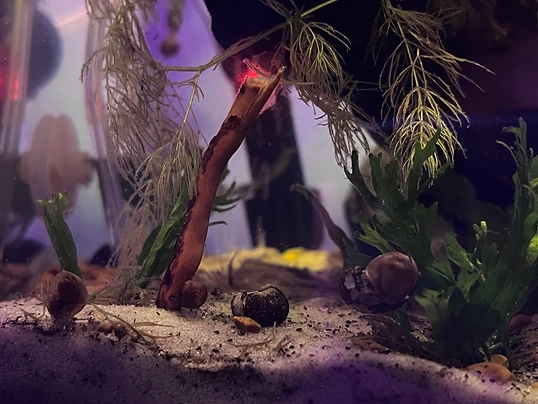
Snails on the Sandy Substrate
Snails grazing on driftwood and sand amid leafy plants — the quiet cleanup crew at work.


Driftwood Aquascape Under LED Light
A driftwood-and-plant aquascape lit by dual LED arms against a dark backdrop.


Blue-Finned Betta by the Driftwood
A dark-bodied betta with vivid blue fins drifting past gnarled driftwood and live plants.


Iridescent Reef Fish
An iridescent blue-green fish gliding over purple-tinted reef rockwork in a saltwater tank.


Driftwood & Duckweed
Gnarled driftwood rising from a sand-and-pebble bed, framed by broad leaves and floating duckweed.


Floating Duckweed Canopy
A dense carpet of floating duckweed with driftwood breaking the surface, lit by warm red highlights.

Aquarium Tank View
A snapshot from the LavishlyClean Aquatics collection


Anemone in the Blue
A sea anemone with yellow-and-purple tentacles glowing against a deep blue reef backdrop.


Anemone
A delicate anemone with cool blue-green tentacles nestled in porous rock.


watermelon Crab on Driftwood
A bright orange crab perched on mossy driftwood in a detailed aquascape. hidden


Juvenile Fish Schooling
Young striped fish exploring a rugged natural rock and driftwood layout.


75 Gallon Driftwood Aquascape
A large centerpiece aquascape built around gnarled driftwood, stone, and a natural sand bed.


Cichlid Tank Under Blue Light
A community of African cichlids — rainbows, peacocks, and zebras — in a moody blue-lit setup.


Orange Shrimp Close-Up
A vivid orange shrimp resting on dark driftwood — a macro look at the cleanup crew.


Betta & Pothos Planted Tank
A vibrant blue betta in a natural aquascape with driftwood, live plants, and trailing pothos.


Featherfin Catfish in the Rocks
A spotted catfish tucked into natural rockwork — recreating its native crevice habitat.

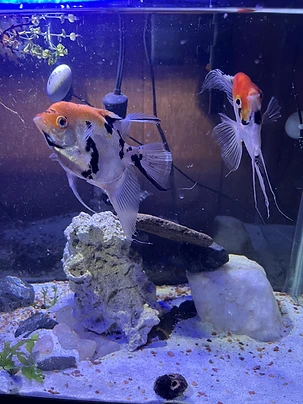
Community Tank Pair
Two colorful community fish swimming among natural stone and plant life.


Blue Betta in the Planted Aquascape
An iridescent blue betta gliding through wispy live plants and driftwood.


Clownfish on the Reef
A classic clownfish resting near Live rock under actinic lighting.


Haitian Sea Anemone
A Haitian anemone with pale tentacles tipped in vivid purple, anchored on natural rock.
My Aquascaping Philosophy
How I approach every tank I build and care for.
Recreating the wild
When it comes to aquascaping, I like to recreate each fish's environment as closely as possible to how it would be in the wild — natural driftwood, live plants, smooth stone, and substrates that mirror a species' native habitat. The goal is a tank where the fish feel at home and behave naturally.
No hard plastic decor
I'm not a fan of hard plastic decorations. They can be rough and cause fin damage, and fish may accidentally ingest small pieces — which is far from ideal, since there is minimal medical care available for aquatic life. Natural materials are safer and look far better.
Keep spare quarantine tanks
I always recommend having at least one to two spare tanks available so you can separate and quarantine new or sick fish. Quarantine is the single best way to prevent disease outbreaks from spreading through your main display tank.
Cichlid Breeding
A natural byproduct of keeping fish in an environment that feels like home.
Natural breeding, happy fish
Because I keep my tanks set up to mirror each species' wild habitat — natural driftwood, live plants, smooth stone, and the right water parameters — the fish feel comfortable enough to behave and reproduce as they would in nature. I indirectly breed cichlids as a result, and I currently have over 25 keyni cichlids in stock.
If you're curious about adding a cichlid to your own tank, let me know — I'm happy to talk through what's available, compatibility with your current setup, and whether a particular fish would be a good fit for you.

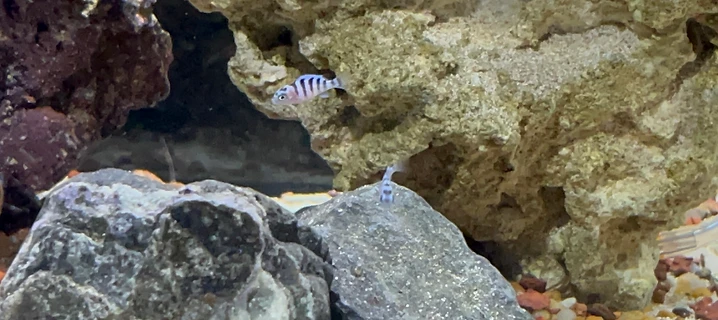
Kenyi Cichlid
Maylandia lombardoi · Lake Malawi
Kenyi Cichlids undergo a dramatic color change as they mature. Juveniles start with a blue or pale blue color, with faint vertical stripes, making them quite attractive. As they age, males transform into a bright yellow with faint vertical bars, while females typically remain blue throughout their lives. This sexual dimorphism in coloration is quite pronounced and adds to the visual appeal of keeping these fish.
In terms of aquarium care, Kenyi Cichlids require a setup that closely mimics the rocky environments of Lake Malawi. Their tank should have plenty of rocks and caves to provide necessary hiding spots and to help diffuse aggression by allowing territorial establishment. The substrate should be sand or fine gravel, suitable for their natural digging behaviors. Due to their territorial and aggressive nature, it is advisable to keep Kenyi Cichlids in a species-specific tank or with other Malawian cichlids that can withstand their aggression.
Water conditions need to be maintained with high quality, reflecting the alkaline nature of their natural lake habitat. The pH should be kept high, and the water should be hard with a stable temperature typical for tropical fish. Regular water changes and robust filtration are crucial to deal with the waste produced by these relatively large and active fish.
Diet-wise, Kenyi Cichlids are omnivorous but require a diet that leans more towards vegetable matter to prevent malawi bloat, a common health issue in cichlids that consume too much protein. Their diet should include high-quality cichlid pellets, spirulina, and vegetable-based foods, with protein offered only in moderation.
Donations & Tank Removals
Giving unused gear a second life and helping you part with tanks you no longer need.
Donate unused supplies
Have supplies, food, medications, or equipment you no longer use? I collect donations and put them to work for other aquarist projects that better serve the community. Just reach out and I'll get back to you to arrange it.
Fish tank removals
Need to get rid of a tank? I offer fish tank removals to help you part with setups you no longer want. For tanks larger than 100 gallons, please let me know in advance — they require more people to move safely.
Ready for a cleaner, healthier aquarium?
Schedule a visit and let me take care of the rest.
Schedule a Visit